
Invasive plants are non-native species that spread aggressively and disrupt the natural balance of our local ecosystem. They often outcompete native plants for sunlight, water, and nutrients, reducing the diversity of plant life that supports birds, pollinators, and other wildlife. In many cases, invasive plants can quickly take over wooded areas, property lines, ditches, open lots, and home landscapes, making them difficult to control once established.
Illinois regulates many invasive plant species through the Illinois Exotic Weeds Act, which makes it illegal to buy, sell, distribute, or plant listed species without a permit, except in limited cases. Controlling invasive plants is important not only for protecting the natural beauty of Hopewell, but also for preserving healthy habitat for native wildlife.
To promote the best biodiversity for our area and help support pollinators and Monarch butterflies as part of the Mayors’ Monarch Pledge, keeping native plants, trees, shrubs, and flowers in the landscape while eliminating invasive and non-native problem species is the best path forward.
Invasive Plants in Hopewell
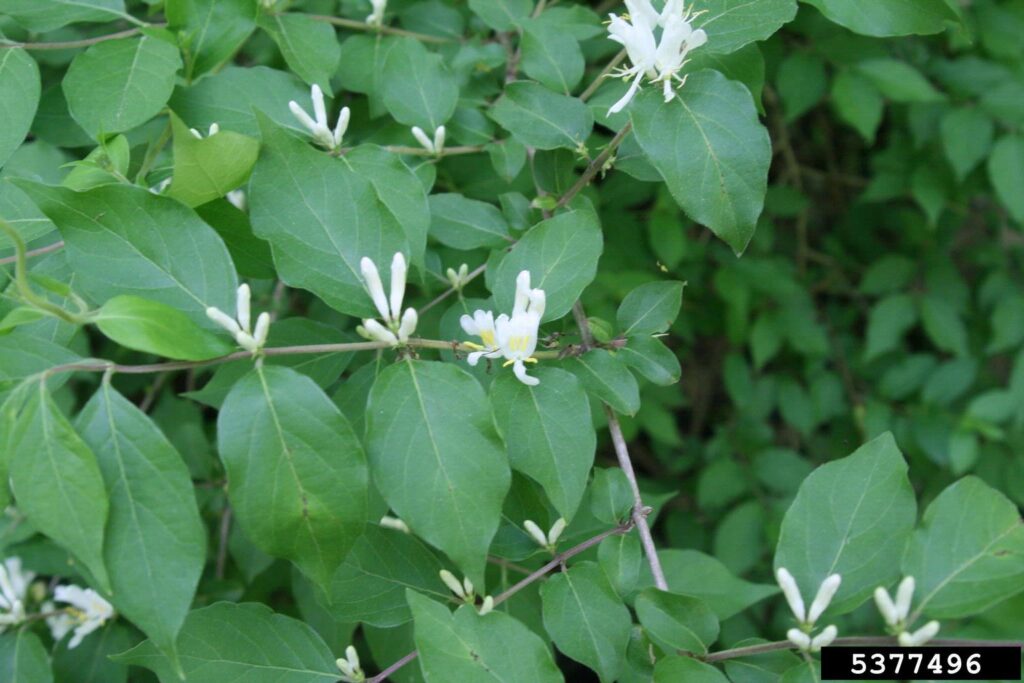
Amur Honeysuckle (Lonicera maackii)
Amur honeysuckle is a large shrub that was once planted for screening and wildlife cover, but it has become one of the most aggressive invasive shrubs in Illinois. It leafs out very early in spring and holds its leaves late into fall, giving it a longer growing season than most native plants. This allows it to block sunlight, crowd out native wildflowers and shrubs, and form dense thickets. Over time, these dense thickets reduce plant diversity and degrade habitat for birds, pollinators, and other wildlife.
Better native alternatives:
Serviceberry (Amelanchier arborea, Amelanchier laevis), American hazelnut (Corylus americana), Arrowwood viburnum (Viburnum dentatum), Common ninebark (Physocarpus opulifolius)
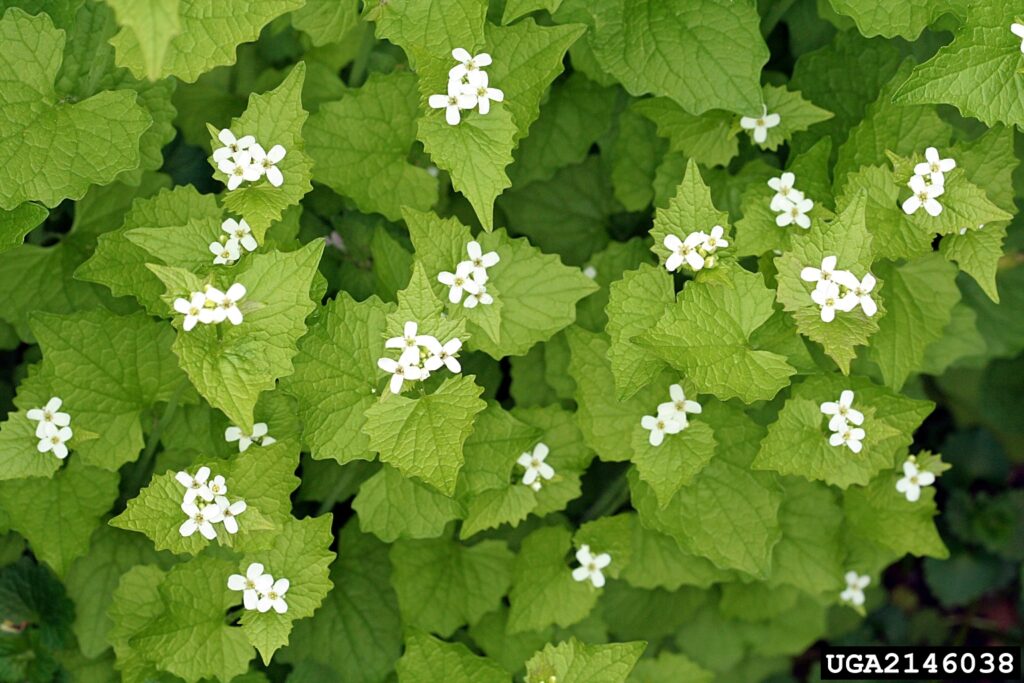
Garlic Mustard (Alliaria petiolata)
Garlic mustard is a fast-spreading biennial herb that invades woodland floors, shaded edges, and disturbed ground. It spreads easily by seed and can quickly form dense patches that displace native spring wildflowers and other understory plants. Garlic mustard is especially harmful because it not only competes for space and nutrients, but can also alter soil conditions in ways that make it harder for native plants to grow. Once established, it can spread rapidly and reduce the diversity of healthy woodland habitats.
Better native alternatives:
Wild ginger (Asarum canadense), Virginia bluebells (Mertensia virginica), Woodland phlox (Phlox divaricata), Jacob’s ladder (Polemonium reptans)
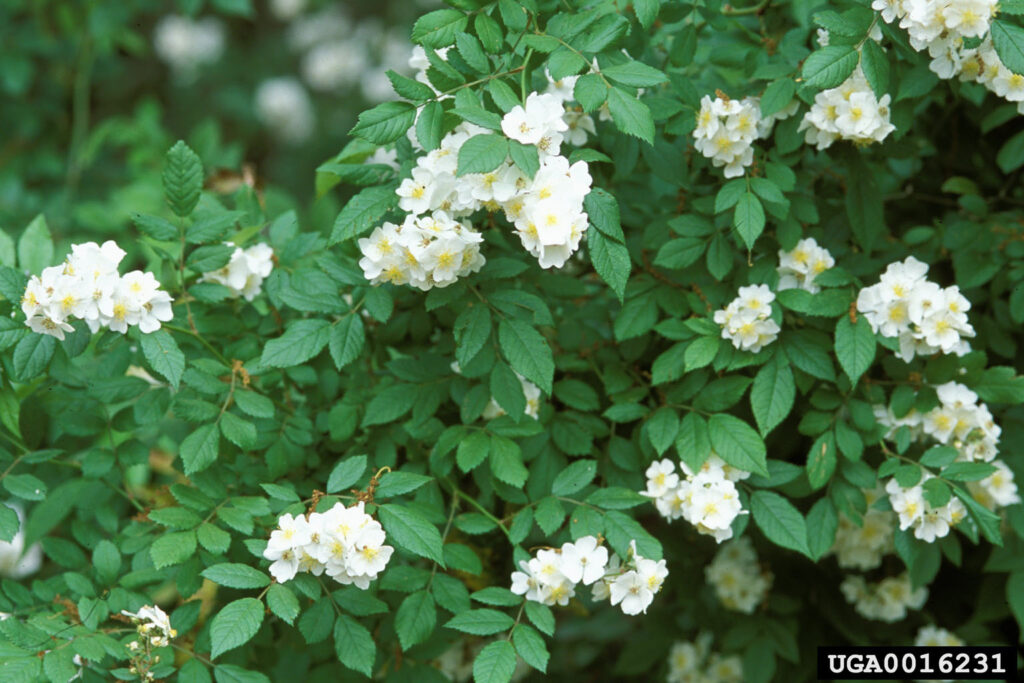
Multiflora Rose (Rosa multiflora)
Multiflora rose was originally introduced for erosion control, living fences, and wildlife habitat, but it now spreads aggressively in fields, roadsides, woodland edges, and unmanaged lots. It produces abundant seeds that are spread by birds, and it can also spread by rooting where its canes touch the ground. This allows it to form thick, thorny, nearly impenetrable thickets that crowd out native shrubs and young trees. Its rapid spread makes land management more difficult and reduces the quality of habitat for native species.
Better native alternatives:
Prairie rose (Rosa setigera), Illinois rose (Rosa foliolosa), New Jersey tea (Ceanothus americanus), Buttonbush (Cephalanthus occidentalis)
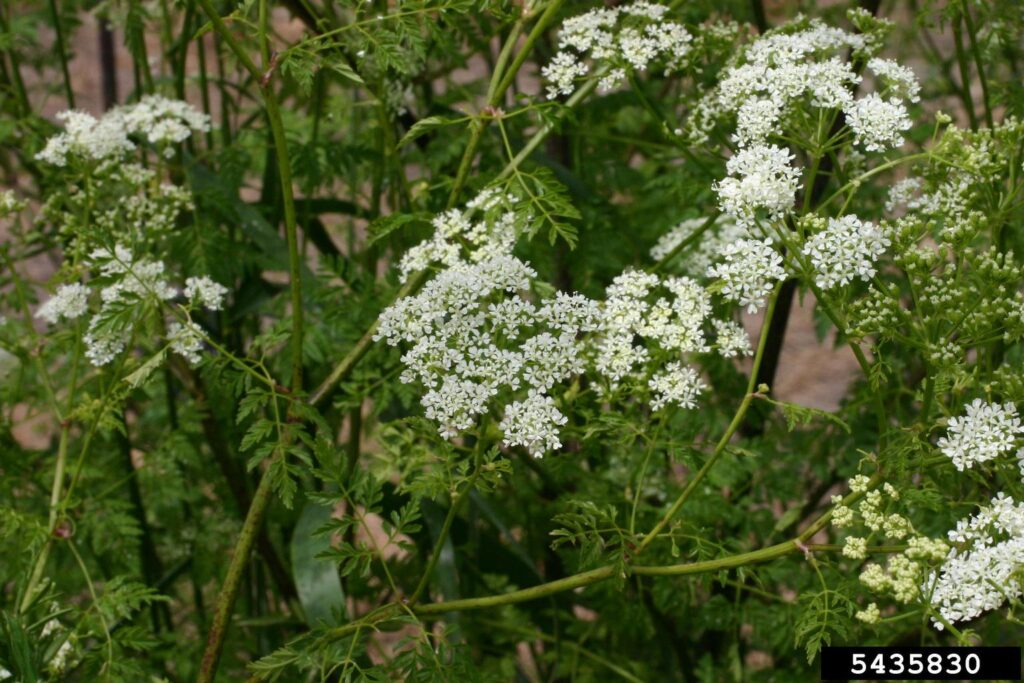
Poison Hemlock (Conium maculatum)
Poison hemlock is an invasive biennial plant commonly found in ditches, roadsides, fence lines, and disturbed areas. It spreads readily by seed and can quickly establish large colonies, especially where land is left unmanaged. In addition to displacing native vegetation, poison hemlock is highly toxic to people, pets, livestock, and wildlife if ingested. Because of its aggressive spread and serious safety concerns, it is especially important to identify and remove it before it becomes well established. Protective gloves, eyewear and respirator mask should be worn when handling this species.
Better native alternatives:
Swamp milkweed (Asclepias incarnata), Blue vervain (Verbena hastata), Culver’s root (Veronicastrum virginicum), Joe-Pye weed (Eutrochium purpureum)
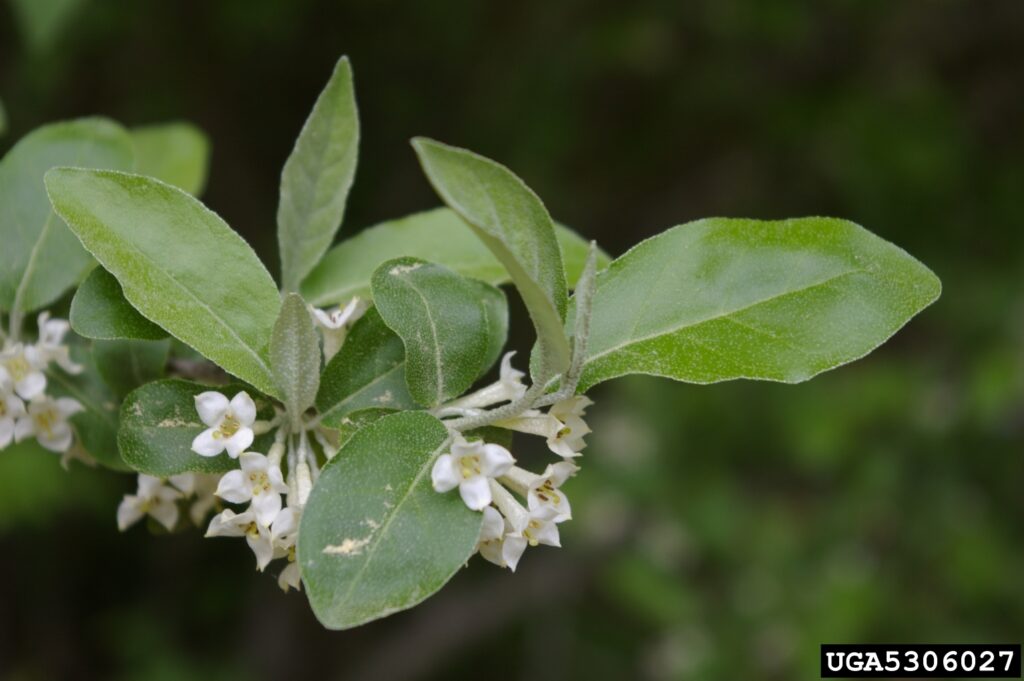
Autumn Olive (Elaeagnus umbellata)
Autumn olive was once widely planted for erosion control and wildlife habitat, but it has since become invasive throughout much of Illinois. It spreads aggressively into open fields, roadsides, woodland edges, and natural areas by producing large amounts of fruit that birds readily eat and disperse. Autumn olive grows quickly and can thrive in poor soils, allowing it to outcompete native shrubs and young trees. Over time, it can form dense stands that reduce sunlight and crowd out the native vegetation needed for healthy ecosystems.
Better native alternatives:
American plum (Prunus americana), Serviceberry (Amelanchier arborea, Amelanchier laevis), Gray dogwood (Cornus racemosa), American elderberry (Sambucus canadensis)
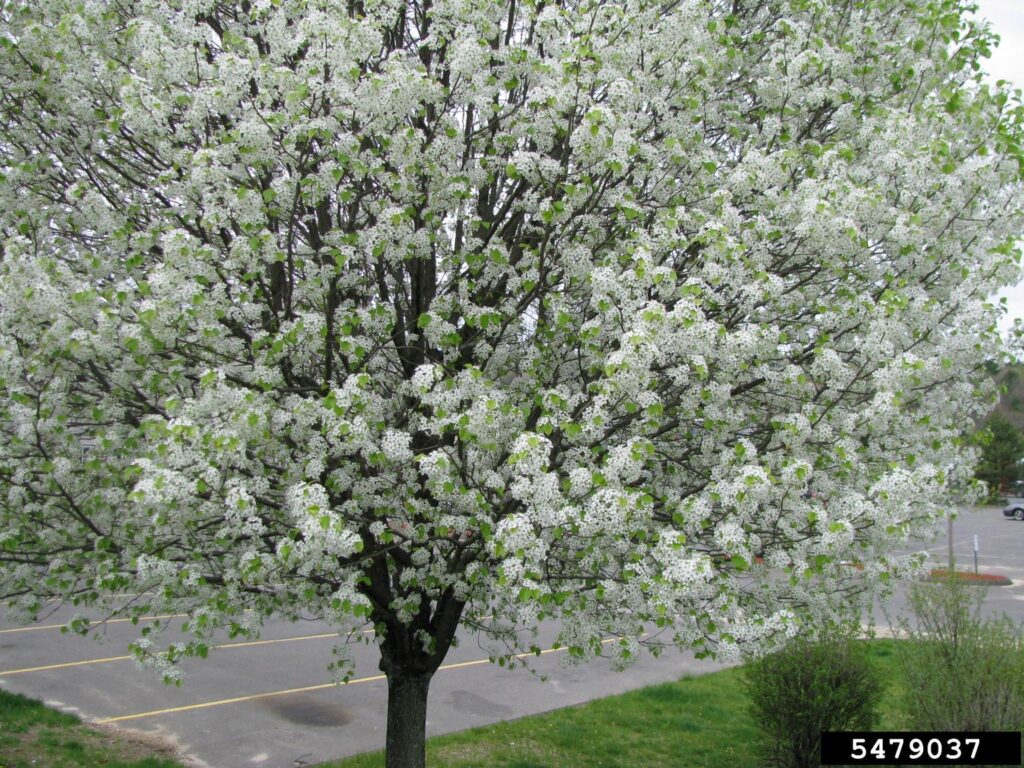
Callery Pear (Bradford Pear) (Pyrus calleryana)
Callery pear, including the commonly known Bradford pear, was widely planted as an ornamental tree because of its fast growth and early spring flowers. Over time, however, it has become an invasive species in many parts of Illinois. It spreads beyond landscaped areas into roadsides, fields, and natural spaces, where it can form dense stands that crowd out native plants. Callery pear is also known for weak branch structure, making it more likely to split or break during storms.
Better native alternatives:
Serviceberry (Amelanchier arborea, Amelanchier laevis), Eastern redbud (Cercis canadensis), Flowering dogwood (Cornus florida), American plum (Prunus americana), Chokecherry (Prunus virginiana)
Protecting Hopewell’s Natural Landscape
Hopewell’s mix of wooded and prairie landscape is one of our community’s greatest assets. Protecting that landscape means encouraging native plants that belong here and removing invasive species that threaten the balance of the local environment. Native plants are better adapted to local soil and weather conditions, provide food and shelter for wildlife, and play an important role in supporting bees, butterflies, and other pollinators.
As part of the Mayors’ Monarch Pledge, Hopewell supports efforts that improve habitat for Monarch butterflies and other beneficial insects. Choosing native trees, shrubs, grasses, and flowers in place of invasive or non-native species is one of the most effective ways to strengthen biodiversity in Hopewell and protect the natural resources that make this community unique.